


Eddie R. Aparicio: Rubberneckers
Jeffrey Deitch Gallery
18 Wooster Street, NYC
September 12–October 31, 2026
There is something unsettling about watching a disaster from a safe distance. We slow down to look at a car wreck, watch a neighborhood burn on our phones, then move on. In Rubberneckers, his first exhibition at Jeffrey Deitch’s 18 Wooster Street gallery in New York, Eddie R. Aparicio takes that uncomfortable habit and turns it back on us. His subject is Los Angeles, but the damage he describes extends well beyond one city.
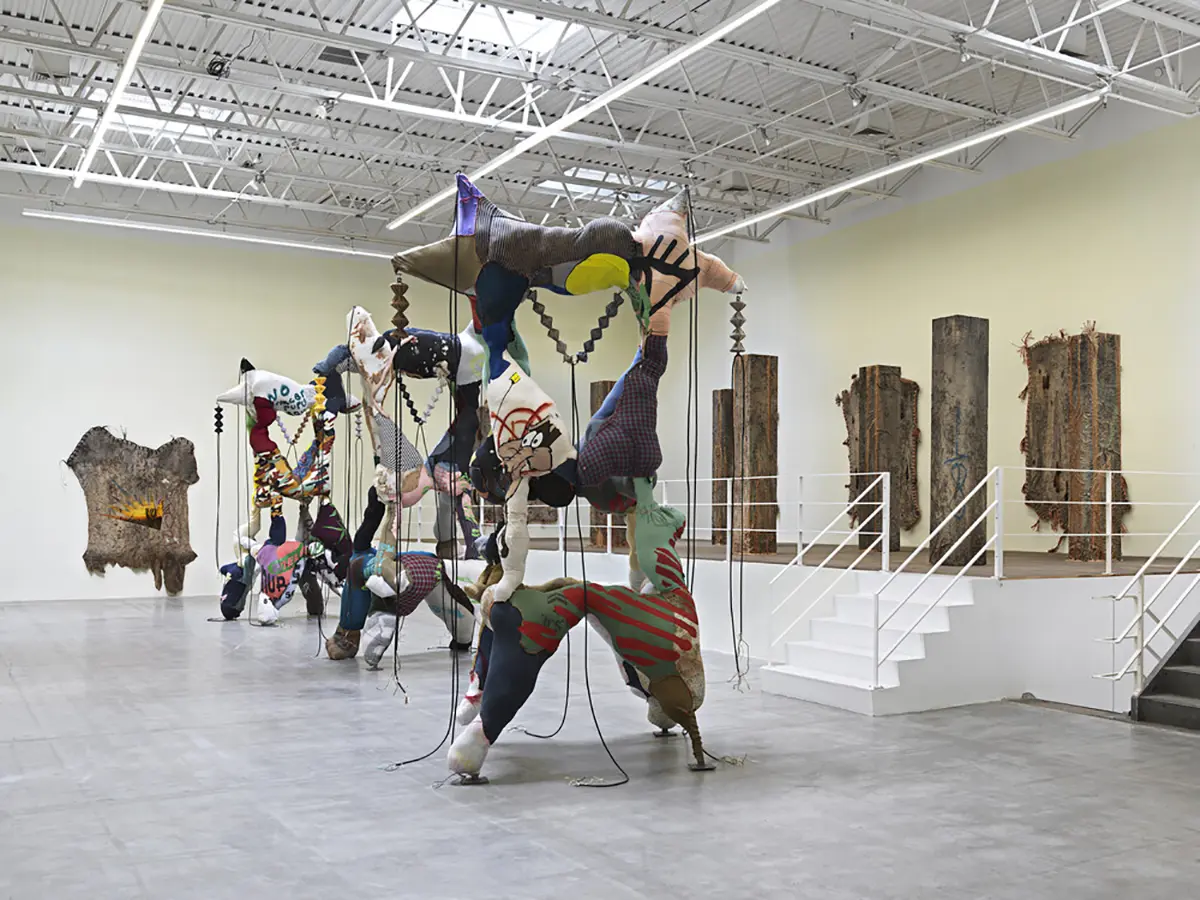
The Eaton Fire in January 2025 destroyed Aparicio’s home in Altadena, along with thousands of other structures. The catastrophe came shortly after his commission for Prospect.6 in New Orleans, where he transformed electrical transmission towers into dolls dressed in family clothing. These works already carried a sense of vulnerability. After the fire, the infrastructure that occupied his art became part of a personal loss.
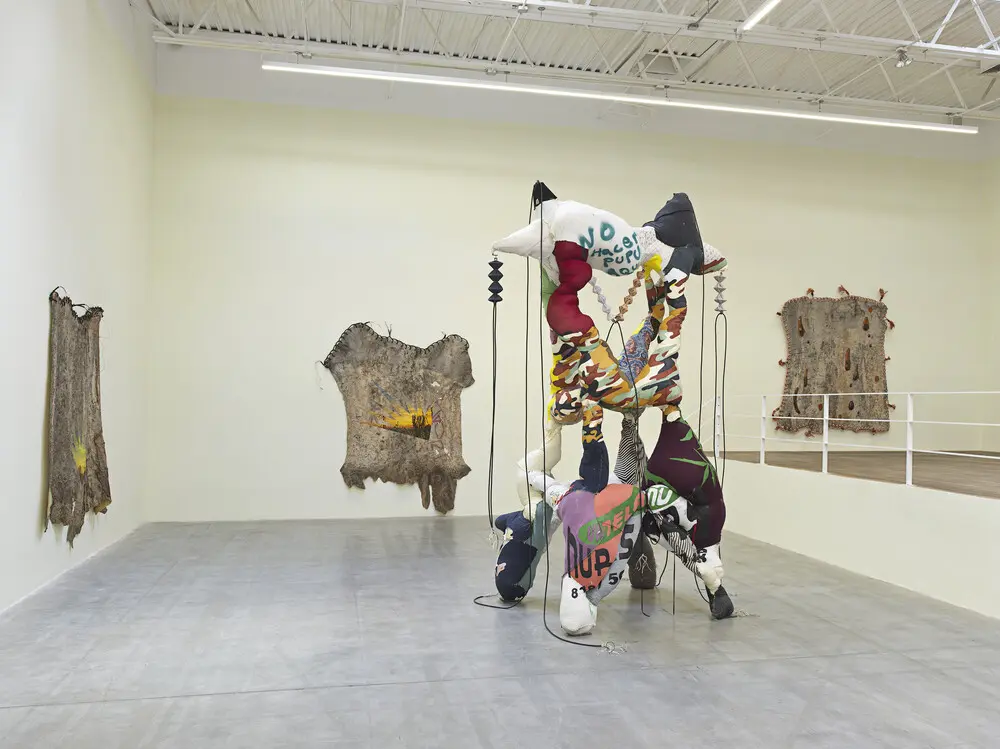
The exhibition feels heavy without becoming theatrical. There are no human figures to guide our sympathies, no easy narrative of destruction and recovery. Instead, Aparicio asks us to look at the things we tend to overlook: trees, utility lines, damaged surfaces and the objects people leave behind. The result is a show about loss that refuses to turn suffering into spectacle.
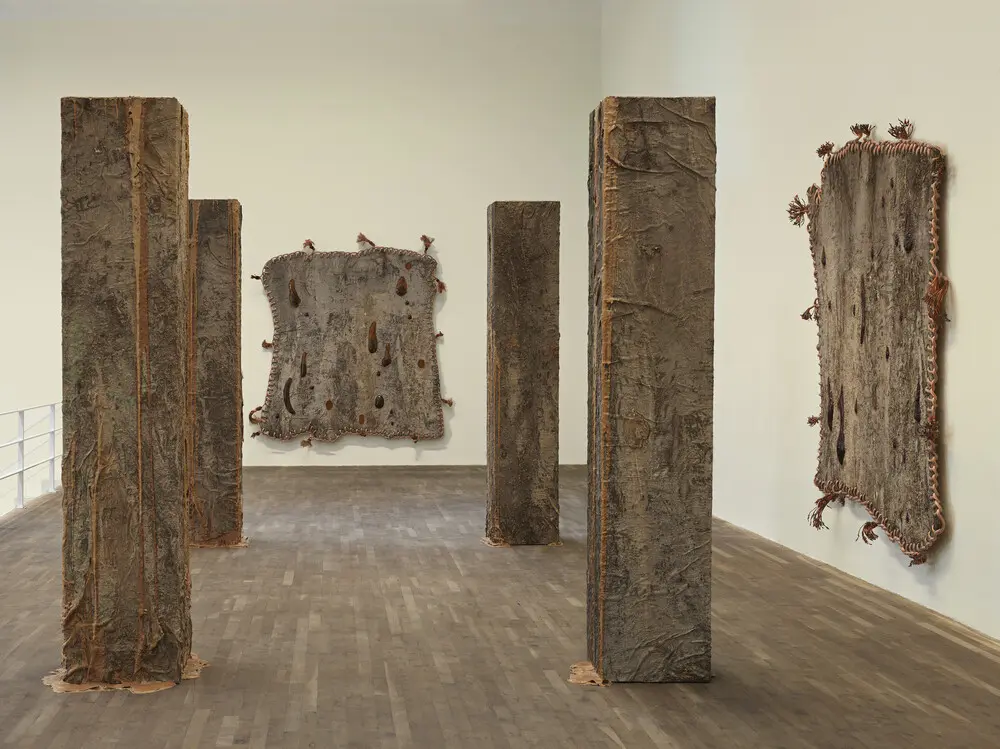
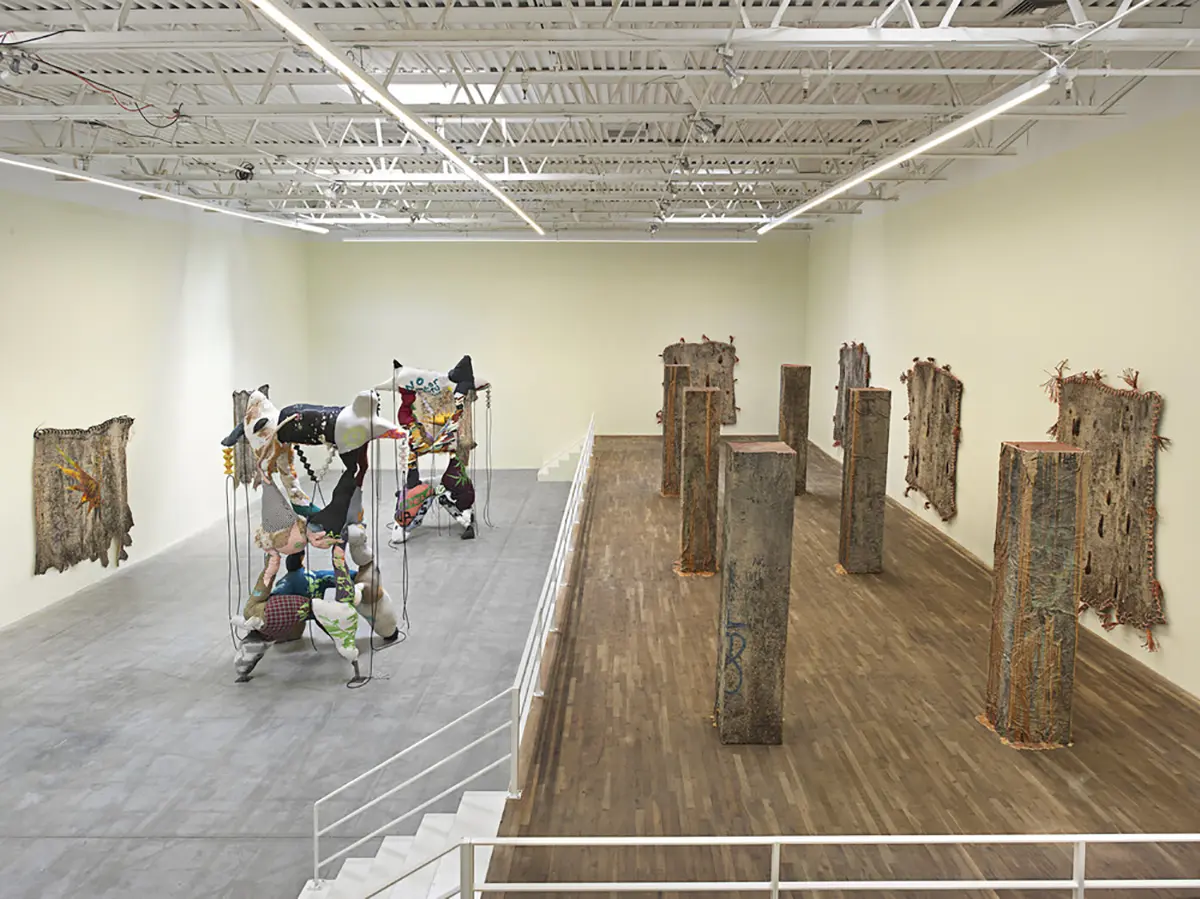
The most compelling works come from his ongoing Caucho series, rubber casts of ficus trees in Los Angeles neighborhoods. Aparicio coats trees marked for removal with liquid rubber, then peels away the hardened material, preserving the scars and impressions left on their bark. Staple holes, graffiti, discoloration and other marks become a kind of unofficial neighborhood archive. These aren’t handsome nature studies. They are closer to forensic evidence, registering the daily contact between a living thing and the people and systems surrounding it.
Aparicio’s new amber sculptures push this idea in another direction. Residents have given him personal objects and fragments collected through conversations in the neighborhoods where he works. Suspended in amber-like material, these things seem caught between preservation and disappearance. The effect can be beautiful, but there is something troubling about it, too. What happens when private memories become art objects? Who gets to preserve a community’s history, and who gets to decide what that history means?
That question gives Rubberneckers its place in contemporary art history. Artists have long used found materials, urban debris and damaged landscapes to challenge the supposedly neutral language of sculpture. Minimalism, with its clean geometry and industrial finishes, is an especially pointed reference here. Aparicio’s upright tree columns recall the spare forms of minimalist sculpture, including John McCracken’s, but their materials carry histories that polished industrial objects tend to conceal. These are not anonymous forms. They come from living landscapes shaped by development, migration and removal.
The electrical utility logo that appears, fragmented, in several paintings makes the politics even harder to ignore. Its association with the Eaton Fire turns a familiar corporate emblem into something menacing, a reminder of how deeply infrastructure and disaster can become entangled.
Aparicio’s art doesn’t offer much comfort, and it shouldn’t have to. Its achievement is to make looking feel less innocent. A tree, a utility pole or a fragment sealed in amber may seem ordinary until we consider what it has witnessed, what has been taken from it, and whose history it carries. The question is whether we are willing to look closely once the spectacle is over.