

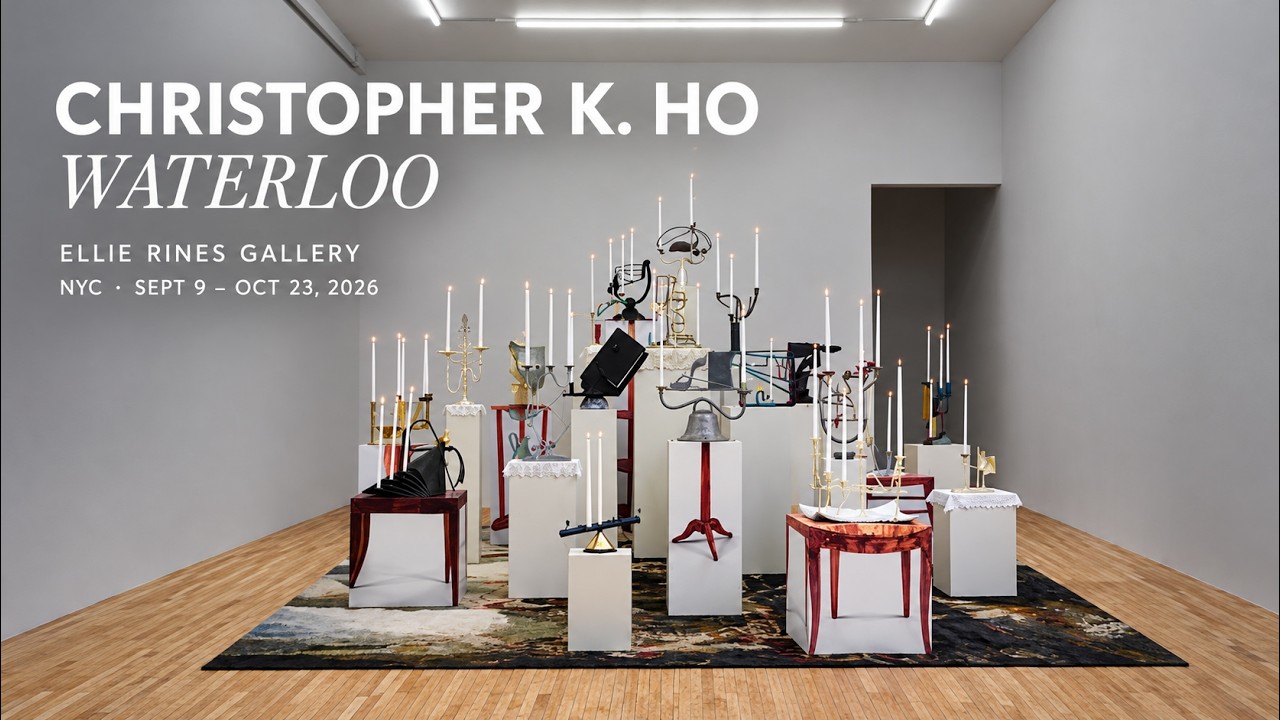
Christopher K. Ho: Waterloo!
Ellie Rines Gallery
46 Walker St, NYC
September 9 – October 23, 2026
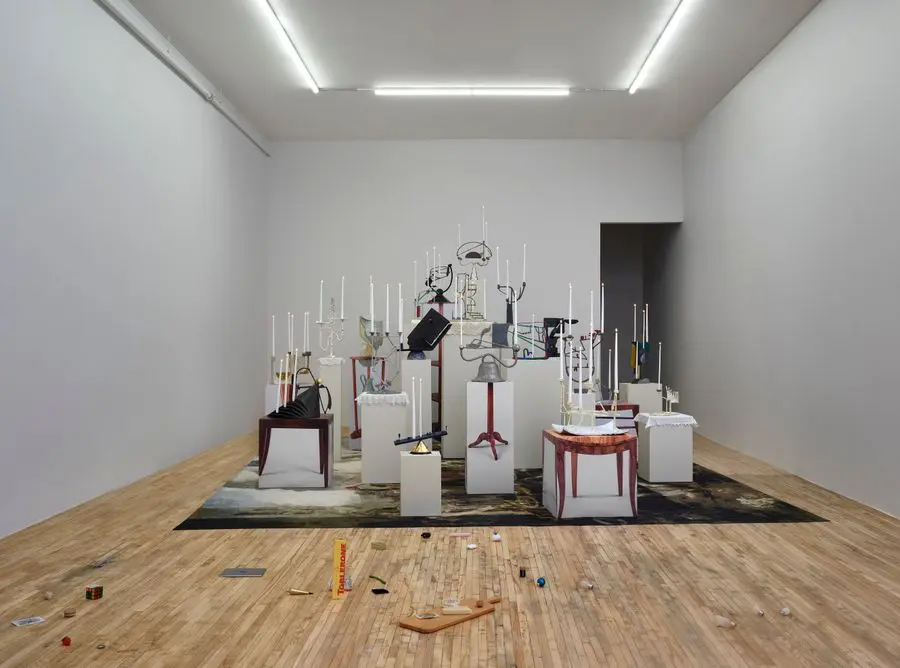
At first glance, Christopher K. Ho’s Waterloo! looks like a rather eccentric collection of candlesticks. Twenty of them, in fact, arranged on tall white pedestals throughout Ellie Rines Gallery’s new space at 46 Walker Street. But these are no ordinary domestic objects. Made of twisting metal, dangling spheres, dark angular forms, and bits of everyday hardware, they look less like things you might light at dinner than decorative, well-designed domestic wares whose purpose has been lost or misused.
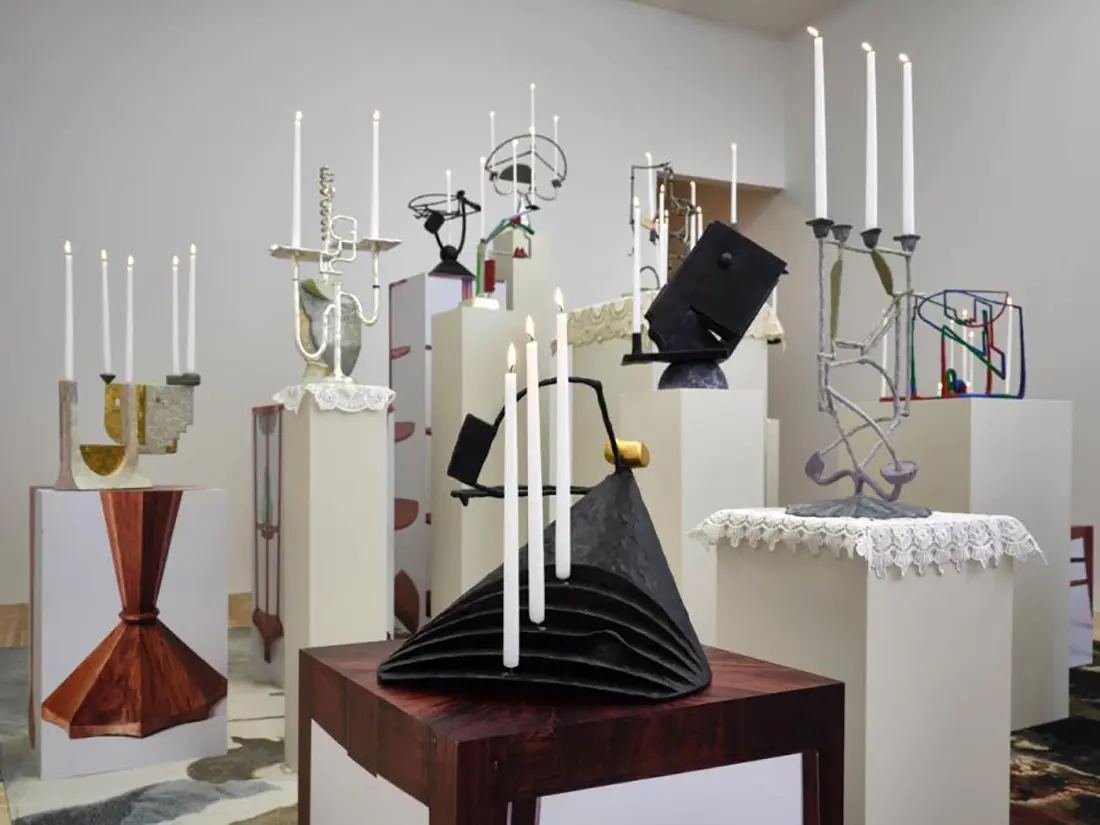
The exhibition’s overall feel is strangely theatrical. Thin candles burn among the sculptures, their fragile flames contrasting with the weight of the metal structures. Beneath them, a rug reproduces scenes of revolutionary upheaval, including Eugène Delacroix’s Liberty Leading the People. The white pedestals, decorated with ghostly outlines of historical furniture, suggest an interior stripped of its comforts. Ho has created a room that feels caught between a private salon and a public uprising. It’s elegant, awkward, and faintly menacing. The candles offer light, but not much reassurance.
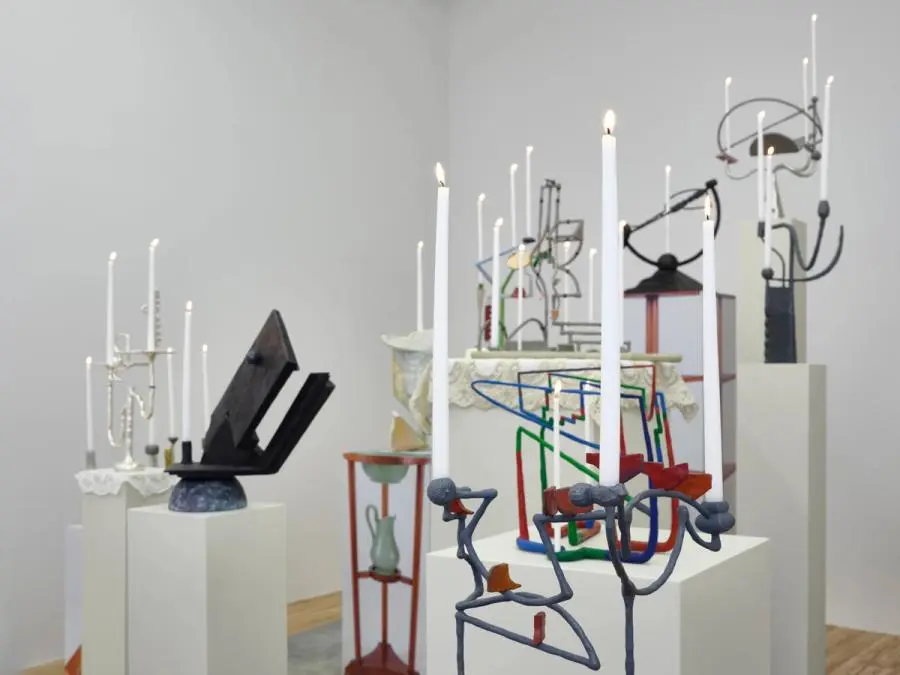
One of the installation’s most compelling aspects is how Ho transforms the candelabra into something closer to a barricade. Their spindly arms jut into space, interrupting the viewer’s movement and making the sculptures seem almost defensive. In another, dark geometric pieces sit at an improbable angle, like fragments of machinery or furniture assembled according to a private logic. Ho incorporates ordinary objects—including golf balls, plumb bobs and light bulbs—into these constructions, giving them an odd mixture of usefulness and absurdity. The objects seem to have escaped their original purposes without quite finding new ones. That uncertainty is part of their appeal.
Ho looks back to the Biedermeier period, the nineteenth-century era of bourgeois domesticity that followed the upheaval of the Napoleonic Wars. But this isn’t a nostalgic exercise in historical decoration. The sculptures suggest that the private home, supposedly a refuge from political turmoil, is never entirely separate from it. The furniture that once signified middle-class comfort could even become material for street barricades.
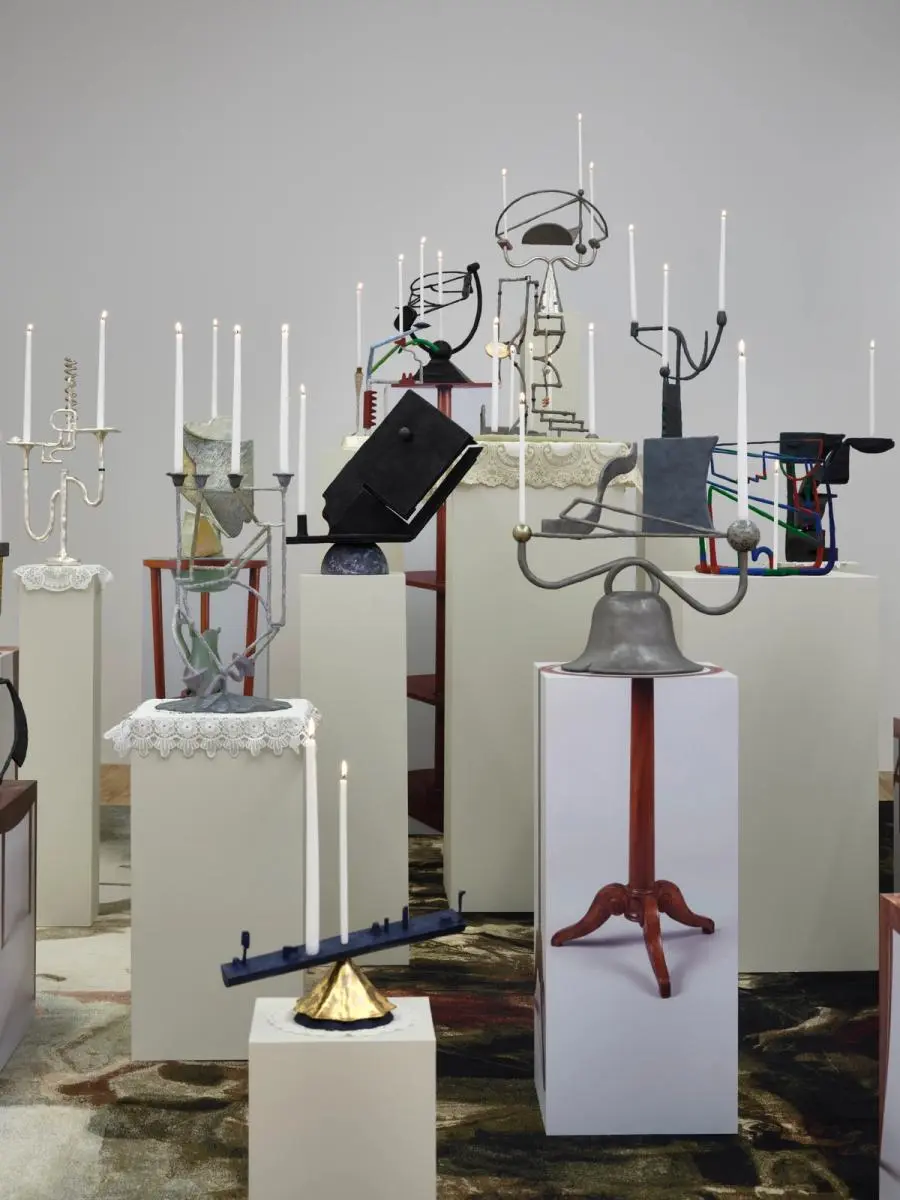
That tension gives Waterloo! its contemporary bite. Ho’s work belongs to a long tradition of artists using familiar objects to unsettle the social order, from Dada’s assault on conventional taste to contemporary installation art’s collision of sculpture, architecture and politics. His references can feel a little overdetermined, and the historical symbolism occasionally threatens to overwhelm the objects themselves. Still, the exhibition’s central question lands: when public life becomes unstable, how safe is the private world we retreat into? The candles keep burning. The barricades remain.