

Jan Dickey: Compression
D. D. D. D. Gallery
Oct 14 – Nov 14, 2026
At D. D. D. D., several floors below street level, Jan Dickey’s Compression rocks the building’s foundation with an explosion of color and form. The show takes a familiar shape—the five-point star—and works it through a strange metamorphosis, pinning its arms and warping its angles to create bold and unexpected shapes. Dickey’s innovative use of materials and painting techniques infuses each piece with a mad, gleaming electricity, forcing the viewer to reconsider their perception of color, space, and time.
Dickey’s artistic process is at the forefront of the exhibition; one might even argue that it is the exhibition. Every piece is a living thing, or a series of living things, all in conversation with each other: shapes are layered, peeled back, pushed together, and painted over. Several of the pieces are composed of two canvases joined together with a hinge, and though some of these were created with a finished two-part image in mind, others were discovered, with the artist painting each panel as a separate piece before hinging them together. The result is an exhibition that is constantly in motion as stars fluctuate and re-negotiate themselves on the canvas.
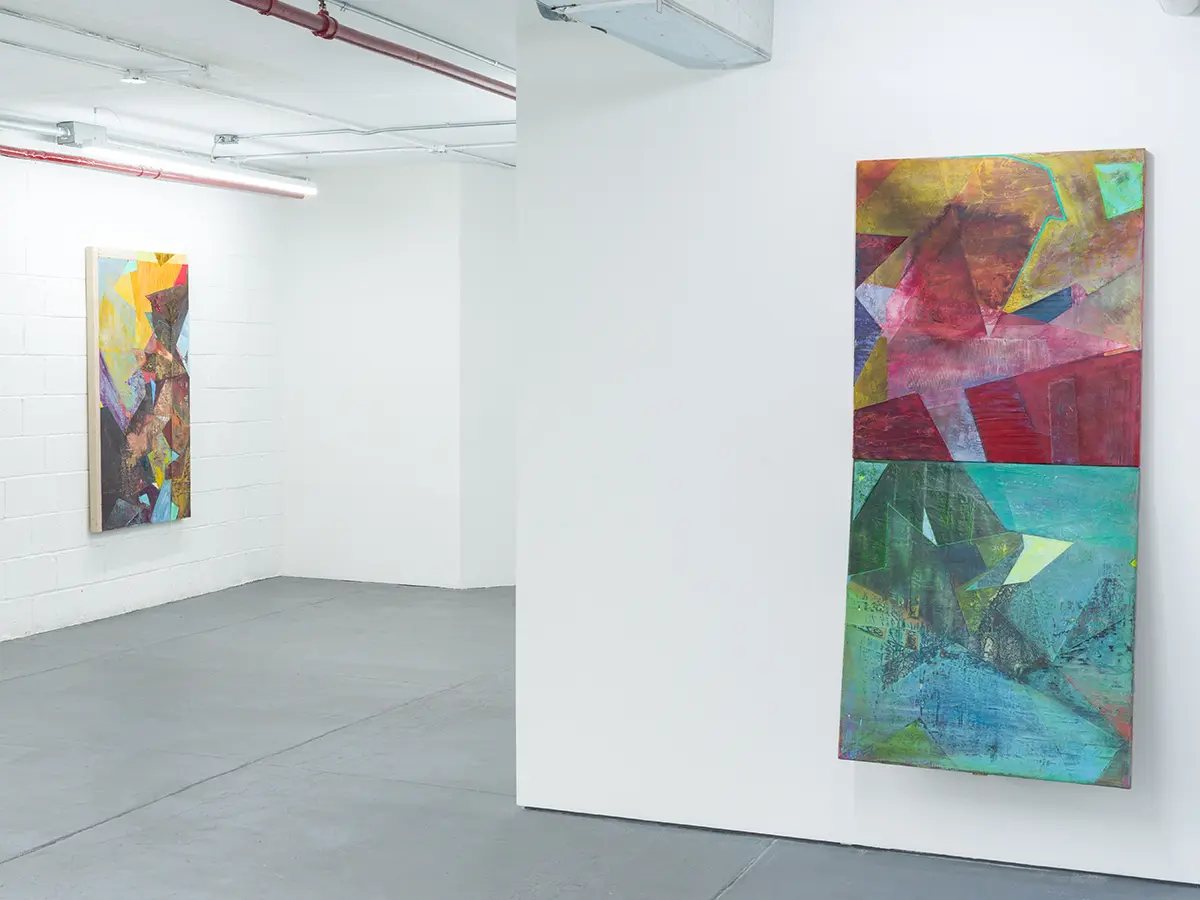
What makes this show so compelling is the way it fragments time just as easily as it fragments shapes. Traditional pigments such as casein and distemper are laid against (and sometimes on top of) bright, modern-looking acrylics, reacting with each other to produce mesmerizing distortions of color. Some panels are smooth as new rubber, while others bubble up and crack off like something pulled from the ruins of Pompeii. Any attempt to order the layers of paint and muslin, to identify the specific star that was laid down first, is frustrated almost immediately; these paintings defy any establishment of a timeline. Everything is happening right now, all at once.
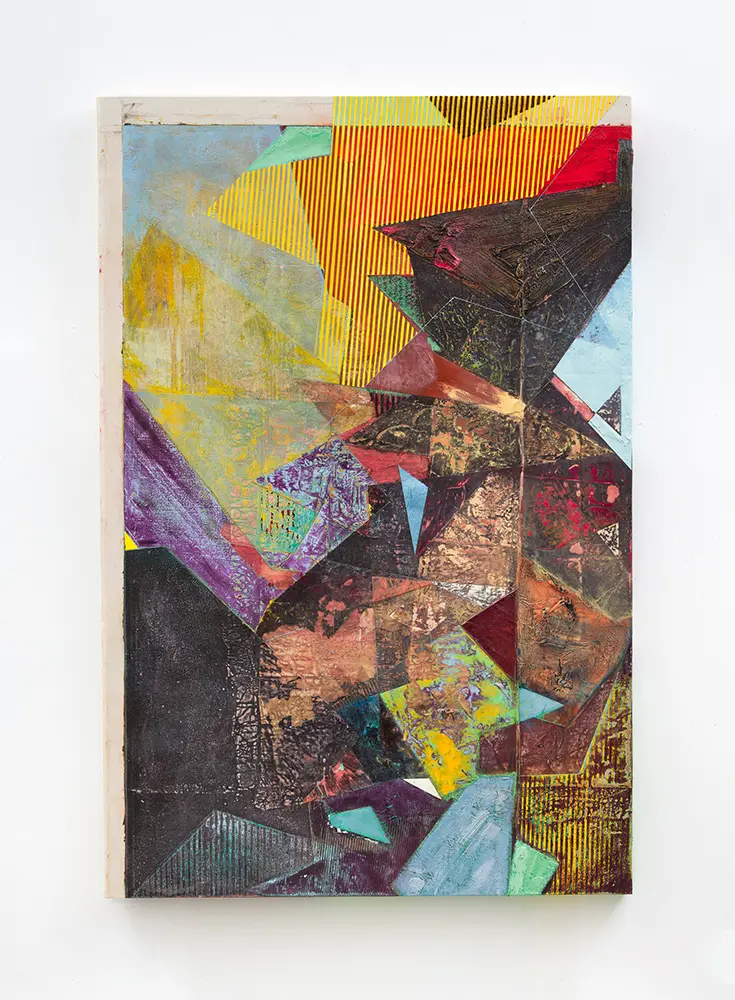
The painting that best exemplifies this principle–and arguably the exhibition’s centerpiece—is the towering 60×40 inch Shadow. The piece is made up of slices of different worlds. A small regiment of uniform lines is interrupted by a slap of dark red paint; Monet-ish pastels graze against subway-graffiti neons. At the top of the canvas, an eye-freezing interplay of red and yellow brings the piece’s rhythm to a startling halt, conflicting with the earthy tones that roll down beneath it. This chaos, which in Shadow feels joyful and exuberant, veers towards a suggestion of violence in other pieces: Mist is interrupted by dark gashes of cochineal, and the stars in the aptly-named Catastrophic are smeared at their edges as if hurled at the canvas with considerable force. Even Jungle Atlas, a rare gasp of open space, troubles its bottom-right corner with a splatter of red.
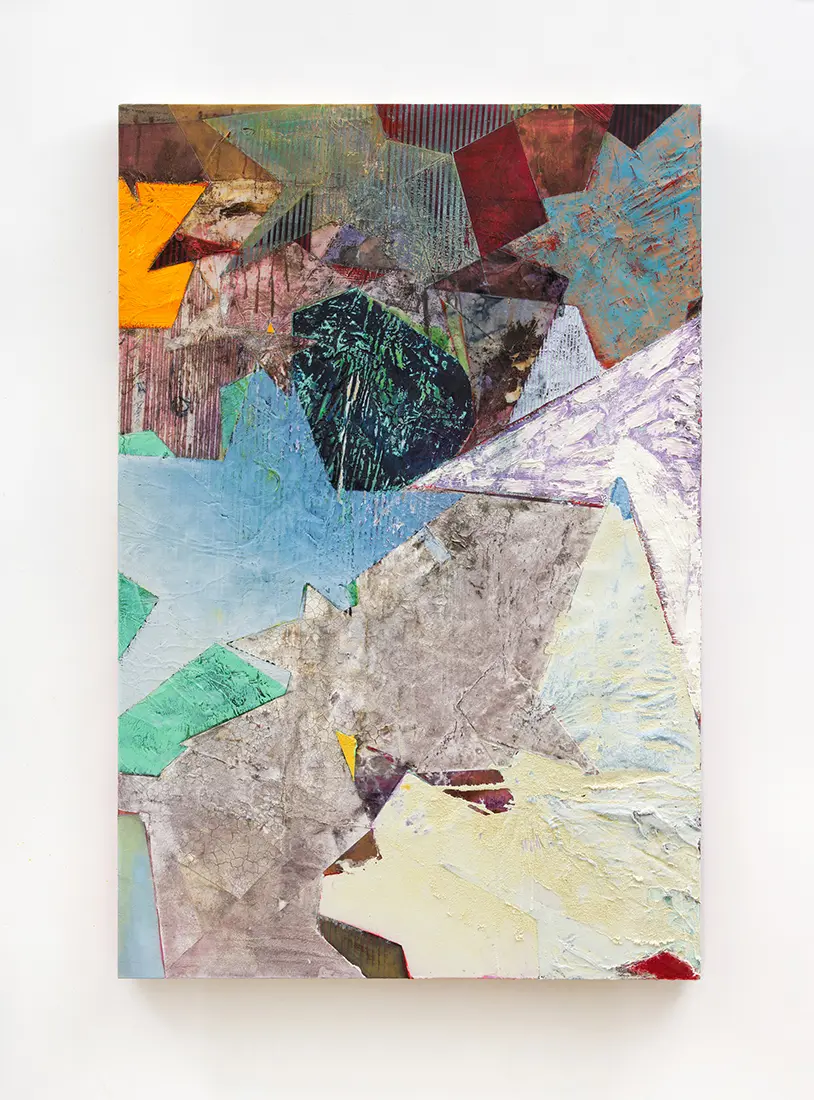
In his artist’s statement, Dickey refuses to reduce the star to a metaphor; he chose it for its “open-endedness,” its ability to “spark a highly specific range of symbolism and feelings.” Combined with his elaborate manipulations of color, texture, and form, the star’s evocative capabilities are indeed pushed to the limit, evading any simple interpretation of their meaning. However, as I walked through the space, I couldn’t help but notice the presence of New York City in Dickey’s exhibition. It was there in the work itself—many of the color formations are evocative of layered paint on a subway wall, or of steel beams discolored with age—but also in its genesis; while working in a Brooklyn studio without natural light, the artist projected the star-shape onto his canvas using a light and a mirror. (D. D. D. D. gallery is also without windows, interestingly enough). With that in mind, it is perhaps not too reductive to draw a connection between Dickey’s work and the city itself, its endless motion brimming with creative energy.