

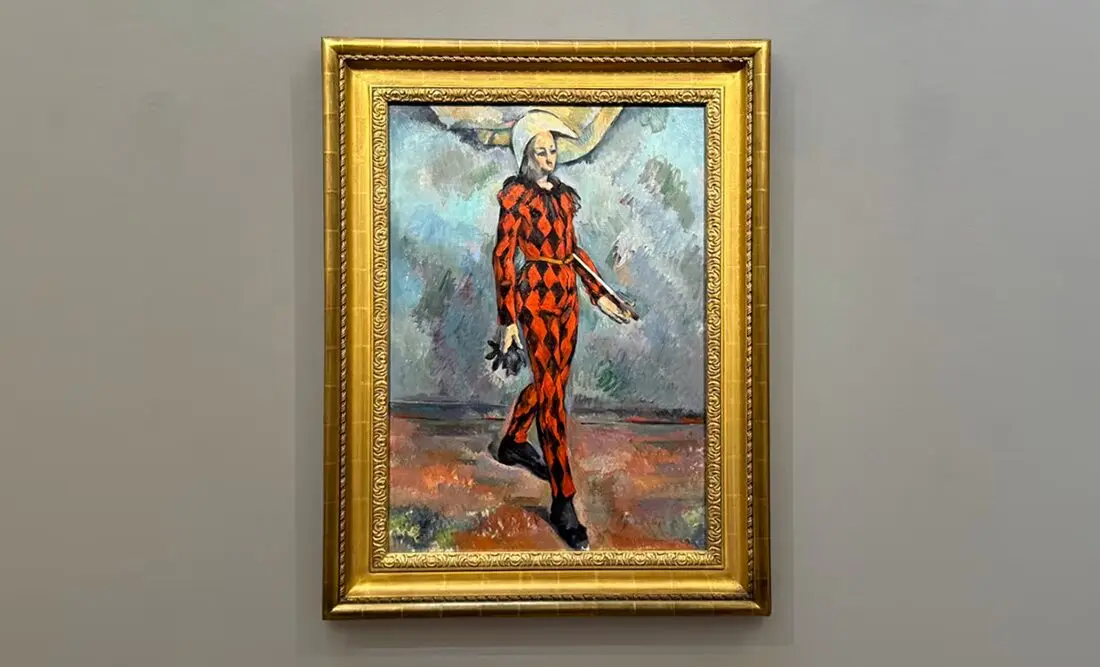
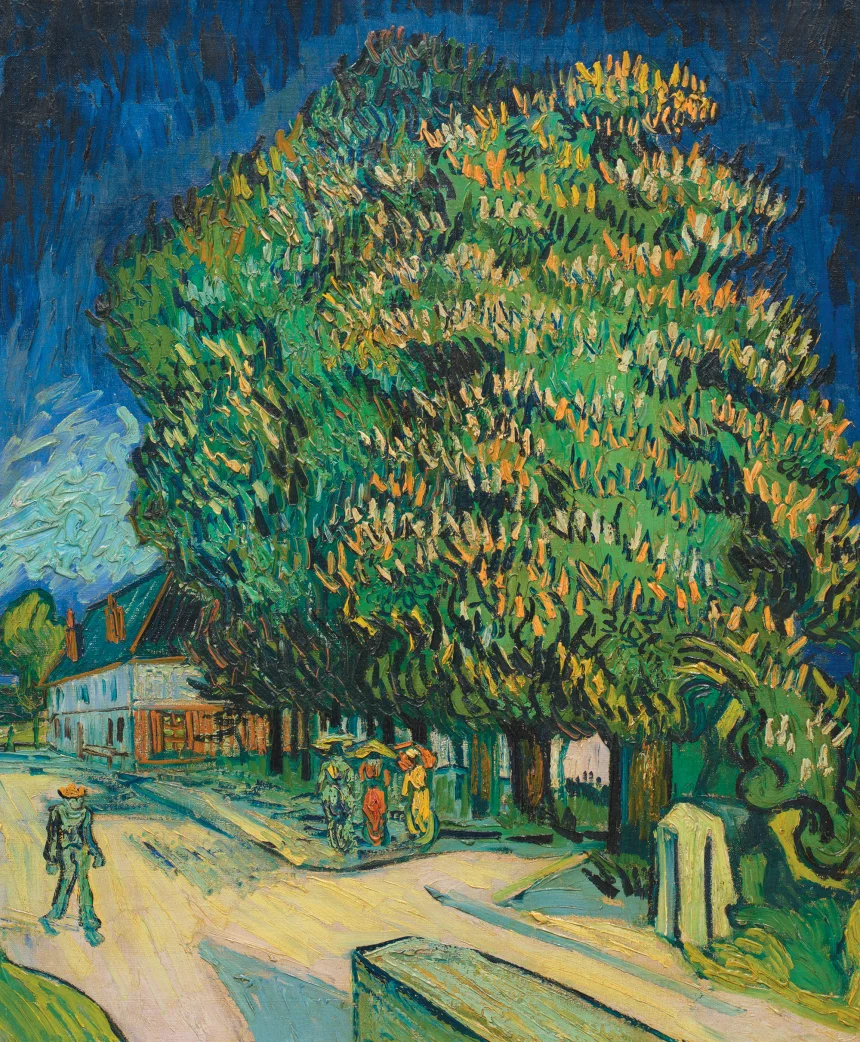
The Blaquier-Arrieta collection has spent decades in the strange territory between legend and reality. Now Sotheby’s is bringing it into the light, with 12 Impressionist and Post-Impressionist works heading to its New York auctions this fall. At the center are Vincent van Gogh’s Châtaigniers-en-fleurs, estimated at $180 million, and Paul Cézanne’s Arlequin, expected to sell in the region of $120 million. Sotheby’s could be looking at more than $450 million from the group.
That number is obviously part of the story. But seeing the works together makes the collection more interesting than a giant price tag.
The overall feeling is less like a conventional auction preview and more like watching a private museum suddenly open its doors. These paintings have been largely invisible to the public for decades, and that absence has become part of their mythology. The Van Gogh has an almost physical intensity—those flowering chestnut trees are full of movement and color, painted near the end of his life in Auvers-sur-Oise. Arlequin, meanwhile, is all structure and tension. Cézanne’s figure feels constructed rather than simply painted, with color doing much of the architectural work. Put the two together, and you get a pretty good reminder of how radically different Impressionism and Post-Impressionism could look while still sharing a fascination with perception.
Arlequin may be the most revealing work in the collection. It belongs to a group of four Harlequin paintings, but unlike the others, which are in museums, this one remained in private hands. Its history includes major dealers and exhibitions at MoMA, Tate, and the Art Institute of Chicago before disappearing back into the Blaquier-Arrieta collection. That trajectory says something about the strange life of important art: a painting can be central to art history and then effectively vanish from public view.
The collection also has a less comfortable history. Carlos Pedro Blaquier, the Argentine industrialist who assembled it with Nelly Arrieta de Blaquier, was investigated over allegations connected to Argentina’s military dictatorship. He denied the allegations and was never convicted. Sotheby’s has emphasized that distinction, but the history is inevitably part of the story when a collection of this scale re-enters the public eye.
Historically, this sale arrives at an interesting moment. Impressionist and Post-Impressionist art has become something of a blue-chip refuge at the top of the market, while many great collections formed in the second half of the 20th century are now being dispersed. We have seen it with the collections of Paul Allen, Leonard Lauder and others. What is unusual here is how long this particular group remained almost completely out of sight.
So yes, Sotheby’s is selling Van Gogh and Cézanne. But it is also selling something harder to price: the return of a collection that became famous partly because almost nobody could see it.