

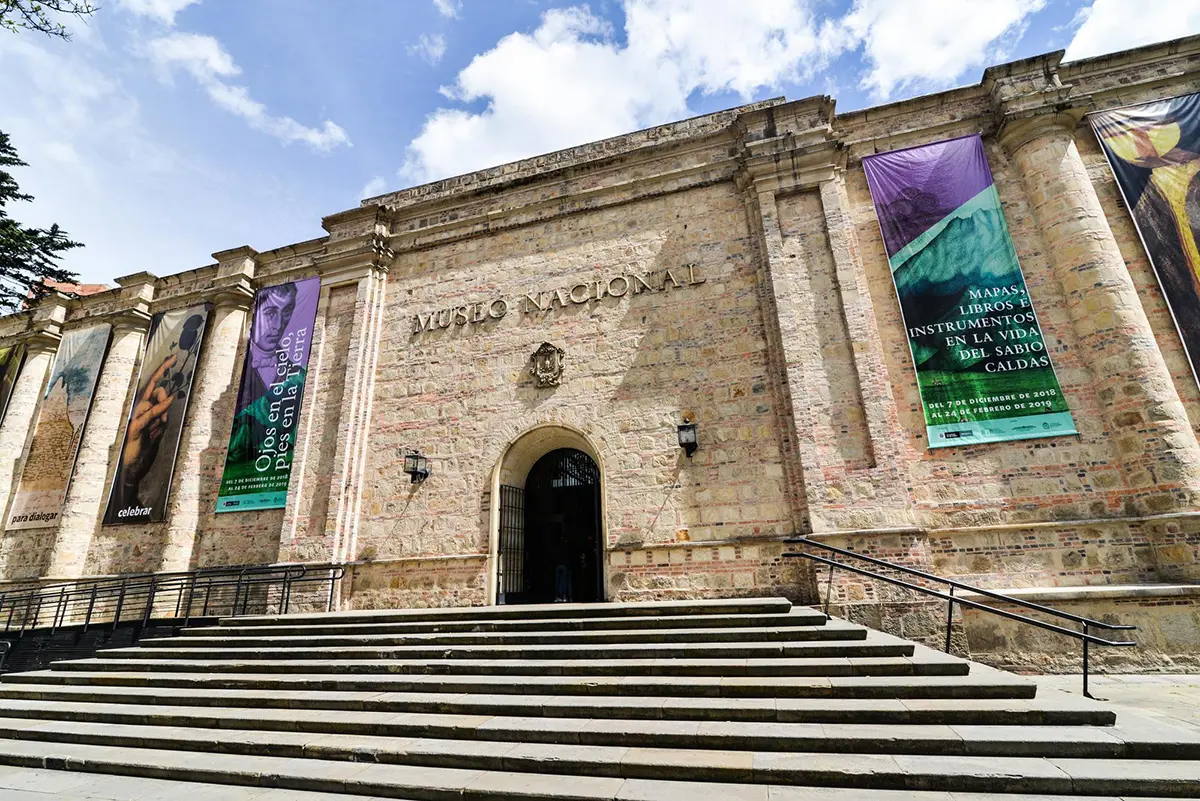
Museums are never entirely neutral spaces. What they display, what they leave out, and whose stories they choose to tell all shape how we understand the past. In Colombia, that question has become a very public fight.
On October 15, Colombia’s National Museum in Bogotá removed dozens of objects from its exhibition galleries, including materials connected to LGBTQ+ rights, feminist movements, political violence, and the country’s peace process. The decision, made under President Abelardo de la Espriella’s government, quickly drew criticism from artists, activists, and cultural organizations, who saw the removals as an attempt to erase parts of the country’s recent history.
Among the objects taken down were a Pride flag associated with LGBTQ+ activist Elizabeth Castillo and a pen fashioned from a bullet, used to sign the 2016 peace agreement between the Colombian government and the Revolutionary Armed Forces of Colombia (FARC). These are not simply things in display cases. They carry the weight of real struggles, political divisions, and lives changed by the country’s history.
On October 28, a judge in Bogotá ordered the Ministry of Culture and the National Museum to return the removed pieces to their original exhibition spaces within 48 hours. The ruling cited concerns involving freedom of expression, access to culture, education, and historical memory. It also questioned whether the removals had been properly justified through the museum’s curatorial procedures.
The objects were subsequently returned to display.
The dispute raises a familiar but uncomfortable question: who has the authority to decide which histories deserve public visibility? Governments change, and museums can certainly reconsider their exhibitions. But there is a difference between revising a display through careful research and removing objects because their political or social meaning is unwelcome.
A museum is not supposed to make history comfortable. Its job is to preserve evidence, create context, and allow people to encounter stories that may complicate their understanding of a nation. Sometimes that means confronting violence, political conflict, or the experiences of communities that have spent decades fighting to be recognized.
The court’s decision does not prevent the museum from making future curatorial changes. Instead, it requires that such decisions follow appropriate procedures rather than simply reflect political disagreement with the material being shown.
That distinction matters. Art and historical objects do not lose their significance because a government dislikes the ideas they represent. If anything, the attempt to remove them makes their presence more important.
What happened in Bogotá reminds us that museums are not just buildings filled with objects from the past. They are places where a society negotiates its identity in the present. And when certain stories disappear from the walls, the question is not only what visitors can see, but what they are being asked to forget.