


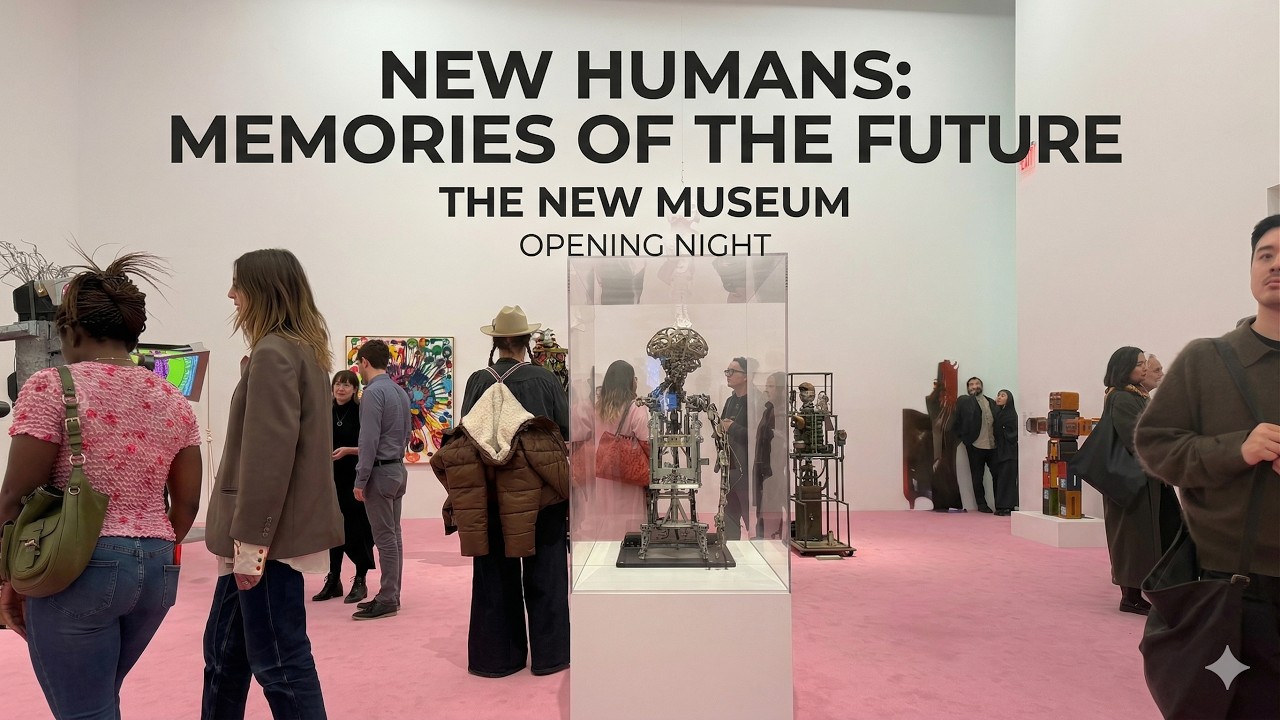
New Humans: Memories of the Future
The New Museum
New York City
The inaugural exhibition, “New Humans: Memories of the Future,” curated by Massimiliano Gioni and his team, sprawls across this newly cavernous, 120,000-square-foot campus. It could turn out to be one of those shows that we look back on 10 years later to realize what an important show this was—a defining curatorial thesis for a post-contemporary epoch teetering on the precipice of total automation.
The sprawling presentation operates, according to the institution’s press release, as “an exploration of artists’ enduring preoccupation with what it means to be human in the face of sweeping technological changes.” This is the sole statement of intent one needs to navigate the labyrinth of over 700 objects.
Video workflow note: for creator workflow, this Lightworks tutorials can help creators plan the edit.

Crucially, the show possesses a deliberate rhythm. If there is a weakness to the exhibition, it is the immense volume of artwork displayed, which is exactly why this rhythm is so vital to a show featuring this caliber of talent. It eschews the exhausting, breathless pace of modern digital consumption in favor of a measured, symphonic dialogue between opacity and transparency, between analog flesh and the cybernetic phantom. The winding atrium staircases—which OMA aptly dubs a “social condenser”—stage a kind of voyeuristic theater, allowing viewers to drift between floors and centuries with cinematic grace. You don’t just view the art here; you orbit it.
Anicka Yi’s floating, biomechanical “aerobes” continually draw the eye upward as they prowl the airspace of the gallery. Among these drifting, translucent entities, a distinct pair capped in a vibrant, blood-red and neural color, gradient commands immediate attention. Propelled by nearly silent rotors, these two red phantoms navigate the cavernous room with an unsettling, autonomous grace. With trailing appendages sweeping through the air, they do not merely occupy the architecture—they actively patrol it, transforming the exhibition into a thriving ecosystem where the viewers become the subjects on display.

Instead of merely trotting out contemporary algorithmic novelties, it also used early artists who helped define humanity in the wake of the twentieth century’s own industrial cataclysms. Here, the biomechanical surrealism of Salvador Dalí and the visceral, tormented meat of Francis Bacon share oxygen with the haunted, post-human synthetics of Anicka Yi and the documentary precision of Hito Steyerl. We see the industrial readymades of Elsa von Freytag-Loringhoven conversing with the animatronic pathos of Carlo Rambaldi’s E.T., mapping an unbroken lineage of flesh mutating into plastic, steel, and code.
Pierre Huyghe’s mesmerizing 2014 film, Human Mask, presents a particularly striking encounter. The video follows a macaque monkey draped in a long dark wig and a pale, impassive mask of a young girl, pacing through a deserted restaurant. Watching the creature’s furred, animal fingers brush against its synthetic, porcelain-like face evokes a profound sense of dislocation. The film compels a questioning of where primal instinct ends and human performance begins, serving as a haunting meditation on survival and the eerie remnants of civilization.

In tracing this diagonal history from the dawn of the robot in the 1920s to our current AI-saturated reality, “New Humans” achieves something exceedingly rare. It demands that we confront the monsters and chimeras we have engineered, asking us what fragments of our humanity will survive the coming flood. If this inaugural triumph is any indication, the New Museum has not just doubled its footprint; it has fundamentally redefined its mandate.